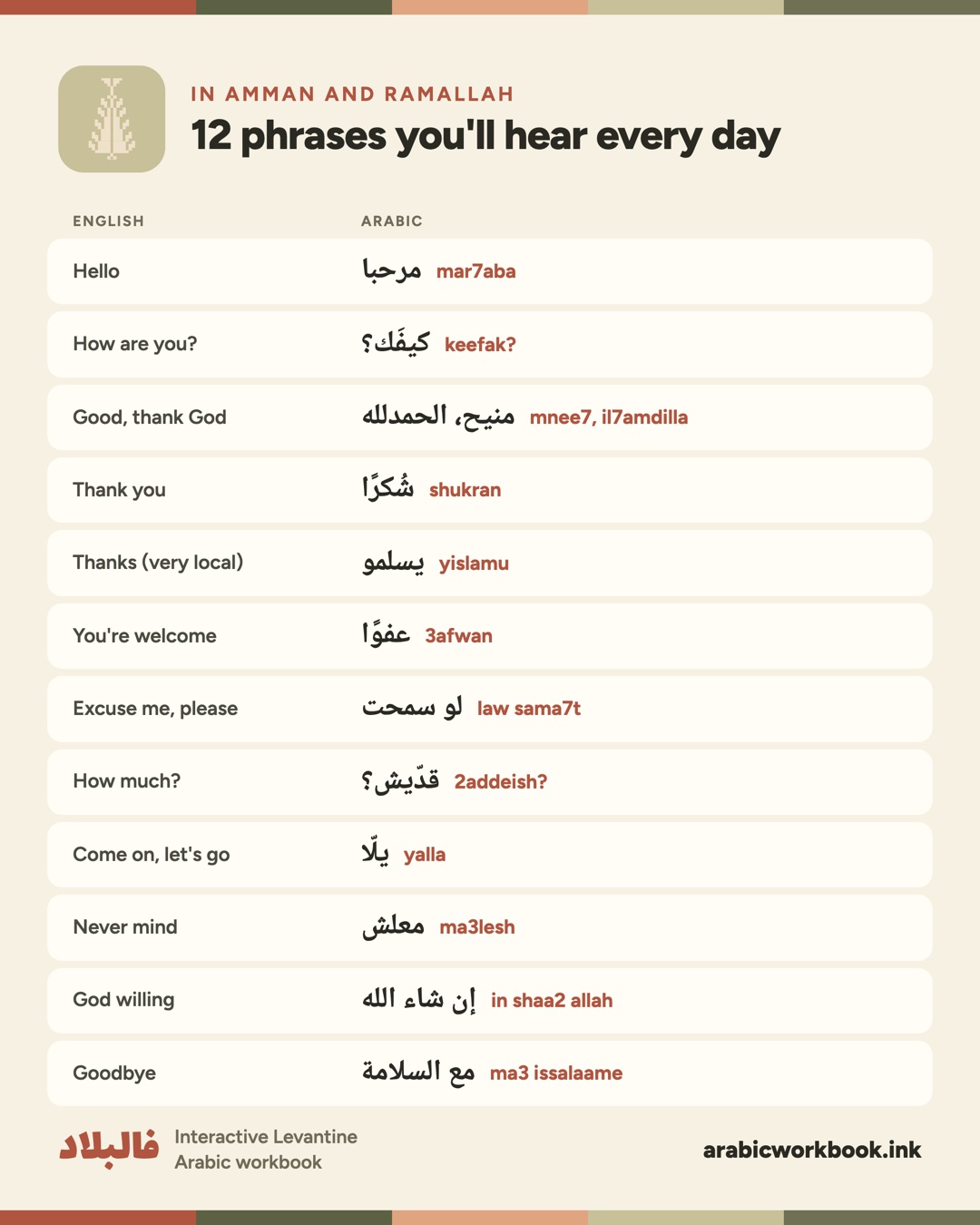
Greetings and how are you
Greetings in the Levant come in pairs: someone says صباح الخير (good morning) and you answer صباح النور (a morning of light). Asking how someone is changes with who you are talking to: add ـَك for a man and ـِك for a woman.
- مرحباmar7abaHello
- صباح الخيرsaba7 il-kheirGood morning
- صباح النورsaba7 in-noorGood morning (the reply)
- مسا الخيرmasa il-kheirGood evening
- مسا النّورmasa in-noorGood evening (the reply)
- كيف حالَك؟keif 7aalak?How are you? (to a man)
- كيف حالِك؟keif 7aalik?How are you? (to a woman)
- تمام شكرًاtamaam, shukranFine, thanks
| Talking to | Arabic | Say it |
|---|---|---|
| a man | كيفَك؟ | keifak? |
| a woman | كيفِك؟ | keifik? |
| a group | كيفكُم؟ | keifkum? |
The usual answer is منيح (mnee7, good) or منيحة (mnee7a) if you are a woman, followed by الحمد لله (il-7amdilla, thank God), which people say whether things are great or just fine.
- انا منيحة الحمد للهana mnee7a, il-7amdillaI'm good, thank God (a woman speaking)
Introducing yourself
- شو اسمَك؟shu ismak?What's your name? (to a man)
- شو اسمِك؟shu ismik?What's your name? (to a woman)
- مرحبا اسمي لينmar7aba, ismi LeenHi, my name's Leen
- من وين إنتَ؟min wein inta?Where are you from? (to a man)
- من وين إنتِ؟min wein inti?Where are you from? (to a woman)
- انا من سورياana min sooryaI'm from Syria
- وين ساكِن؟wein saakin?Where do you live? (to a man)
- تشرّفناtsharrafnaNice to meet you
- أهلا فيكahlan feekWelcome to you too (the reply to أهلا)
For nationalities and the pronouns behind these questions, see Arabic pronouns in spoken Levantine.
Thank you, please and sorry
Politeness phrases often change for a man or a woman, like لو سمحت and لو سمحتي. يعطيك العافية is worth learning early: it is a friendly hello to anyone who is working, from a shopkeeper to a taxi driver, and it also works as a thank you.
- شكرًاshukranThank you
- عفوًا3afwanYou're welcome
- لو سمحت / لو سمحتيlaw sama7t / law sama7tiPlease, excuse me (to a man / a woman)
- يعطيك العافيةya3teek il-3aafyeHello to someone working; also 'thanks for your effort'
- الله يعافيكallah y3aafeekThe reply to يعطيك العافية
- كاش لو سمحتي معوضينkaash law sama7ti, m3awwadeenCash, please. Thanks (lit. may you be compensated)
- آسف / آسفةaasif / aasfeSorry (a man / a woman speaking)
- ولا يهمّكwala yhimmakNo worries, don't mention it
Taxis and directions
Directions use a handful of words: يمين (yameen, right), شمال (shmaal, left), دُغري (dughri, straight on) and بعدين (ba3dein, then). Commands change for a man, a woman or a group, which is why you will hear both امشي and روحي below; the commands page has every form.
- كيف أروح لهاد المكانkeif aroo7 la-haad il-makaan?How do I get to this place?
- اِمشي دُغريimshi dughriWalk straight ahead
- لِف يمين بعدين دُغريliff yameen ba3dein dughriTurn right, then go straight
- روحي يمين بعدين شمالroo7i yameen ba3dein shmaalGo right, then left (to a woman)
- كمل دغري ولف الدوار شمالkammil dughri w-liff id-duwwaar shmaalKeep going straight and turn left at the roundabout
- وقّف هون لو سمحتwa22if hoon law sama7tStop here, please (to a man)
Cafés, shops and prices
- شو بتحبي تطلبي؟ ممكن المنيو لو سمحتي؟shu bti7ibbi tutlubi? mumkin il-menu law sama7ti?What would you like to order? Can I have the menu, please?
- اي شي تاني؟ لأ شكرا!ay ishi taani? la2, shukran!Anything else? No, thanks!
- فيزا او كاش؟ كاش لو سمحتي!feeza aw kaash? kaash law sama7ti!Card or cash? Cash, please!
- كم الحساب؟kam il-7isaab?How much is the bill?
- قدّيش؟2addeesh?How much?
- ممكن الفاتورة؟ اكيد تفضليmumkin il-faatoora? akeed, tfaddaliCan I have the receipt? Sure, here you go
Prices take a little grammar of their own (two dinars is دينارين, not إتنين دينار). The numbers and money guide walks through it.
Family and small talk
- مرحبا اليوم رح اعرفكم على عيلتيmar7aba, il-yoom ra7 a3arrifkum 3ala 3eeltiHi, today I'm going to introduce you to my family
- شو بتشتغل؟shu btishtighil?What do you do for work? (to a man)
- إن شاء اللهinshallaHopefully, God willing
- مع السلامةma3 is-salaameGoodbye
Words you will hear all the time
| Arabic | Say it | Meaning |
|---|---|---|
| يلا | yalla | come on, let's go |
| والله | wallah | really? / I swear |
| أكيد | akeed | sure, of course |
| يعني | ya3ni | I mean, so, kind of |
| خلص | khalas | enough, done, OK then |
| معلش | ma3lesh | never mind, sorry |
| هيك | heik | like this, so |
| ليش | leish | why |
| كتير | ktir | very, a lot |
Lebanese differences
Lebanese Arabic is Levantine too, so nearly everything above works in Beirut. A few common words are different, and Lebanese speakers often use عم before a verb for 'right now'.
| English | Jordanian–Palestinian | Lebanese |
|---|---|---|
| yes | آه (aah) | إيه (eh) |
| now | هسّا (hassa) | هلّق (halla2) |
| what are you doing? | شو بتعمل؟ (shu bti3mal?) | شو عم تعمل؟ (shu 3am ti3mal?) |
| I want | بدّي (biddi) | بدّي (baddi) |
Tip: Mind the ending on كيفك, شو اسمك and the commands. Saying كيفَك to a woman is the most common beginner slip, and people will understand you, but getting it right sounds much more natural.
Check yourself
- How do you answer صباح الخير?
Show answer
صباح النور · saba7 in-noor
- How do you ask a woman her name?
Show answer
شو اسمِك؟ · shu ismik?
- How do you say 'straight ahead'?
Show answer
دُغري · dughri
- What do you say to a shopkeeper to say hello and thanks for their work?
Show answer
يعطيك العافية · ya3teek il-3aafye
Questions people ask
How do you say 'how are you' in Levantine Arabic?
كيفَك؟ (keifak) to a man, كيفِك؟ (keifik) to a woman and كيفكُم؟ (keifkum) to a group. كيف حالَك؟ (keif 7aalak) is a slightly fuller version.
How do you say 'thank you' in Levantine Arabic?
شكرًا (shukran). You will also hear يسلمو (yislamu) and, to someone who has worked for you, يعطيك العافية (ya3teek il-3aafye).
What does يعطيك العافية mean?
Literally 'may God give you health'. It is a friendly greeting to someone at work and a way to thank them for their effort. The reply is الله يعافيك (allah y3aafeek).
Are Jordanian and Palestinian Arabic the same?
They are very close, and are usually taught together as southern Levantine. There are small differences in words and pronunciation from city to city, but speakers understand each other completely.


